Python 3 is a widely used programming language for AI, DevOps, and application development. It also has a server-side scripting capability. CentOS 10 comes with Python as a standard for system tools. However, you may not have the latest Python 3 for modern development and applications. Installing Python 3 is easy on CentOS 10. You can use the default repositories or alternative repositories such as EPEL. Or you can compile from source.
This guide explains all possible methods, each one step by step.
Table of Contents
- How to Install Python 3 on CentOS 10
- How to Set Python 3 as Default (Optional)
- How to Uninstall Python 3 from CentOS 10
- Conclusion
How to Install Python 3 on CentOS 10
The easiest way to install Python 3 on CentOS 10 is to update your system with “sudo dnf update -y”, then install Python and pip using “sudo dnf install python3 python3-pip -y”, and verify the installation with “python3 –version”; alternatively, you can enable newer Python versions through EPEL or AppStream modules, or compile the latest release from source if you need the most up-to-date version, making Python installation flexible depending on your requirements.
Method 1: Install Python 3 from CentOS 10 Default Repositories (Recommended)
This is the most straightforward and stable method, which is ideal for most users.
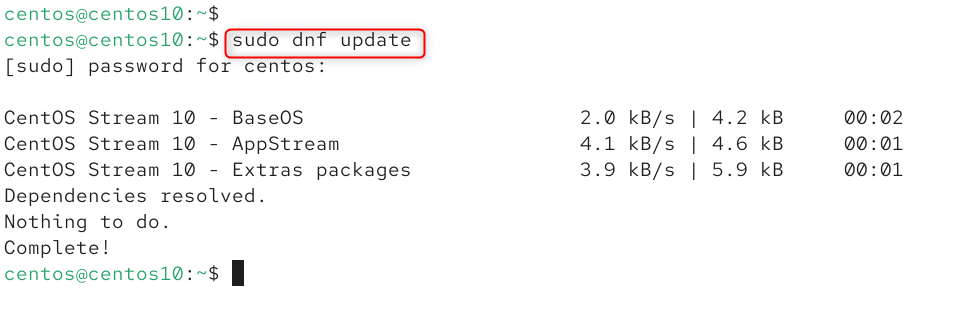
Step 1: Update System Packages
By updating, you will install the most recent packages.
|
sudo dnf update |
|---|

Step 2: Install Python 3 and pip
Install Python 3 and Pip directly from the CentOS repository.
|
sudo dnf install python3 python3-pip |
|---|
Step 3: Verify Installation
Checks that Python 3 and Pip are installed correctly.
|
python3 –version pip3 –version |
|---|
Method 2: Install Python 3 from EPEL or AppStream Repository
When newer versions of the software are available through EPEL/AppStream modules.
Step 1: Install EPEL Repository
EPEL offers extra packages that are not included in base pricing.
|
sudo dnf install epel-release |
|---|
Step 2: List Available Python Versions
Displays Python versions from AppStream or EPEL.
|
sudo dnf list available | grep python3 |
|---|
Step 3: Install Python 3
Installs the selected Python version.
|
sudo dnf install python3 -y |
|---|
Step 4: Verify Installation
Checks that Python 3 and Pip are installed correctly.
|
python3 –version |
|---|
Method 3: Install Python 3 by Compiling from Source (Latest Version)
The latest Python releases are not available on repositories.
Step 1: Install Build Dependencies
Python source code is required for compilation.
|
sudo dnf groupinstall “Development Tools” |
|---|
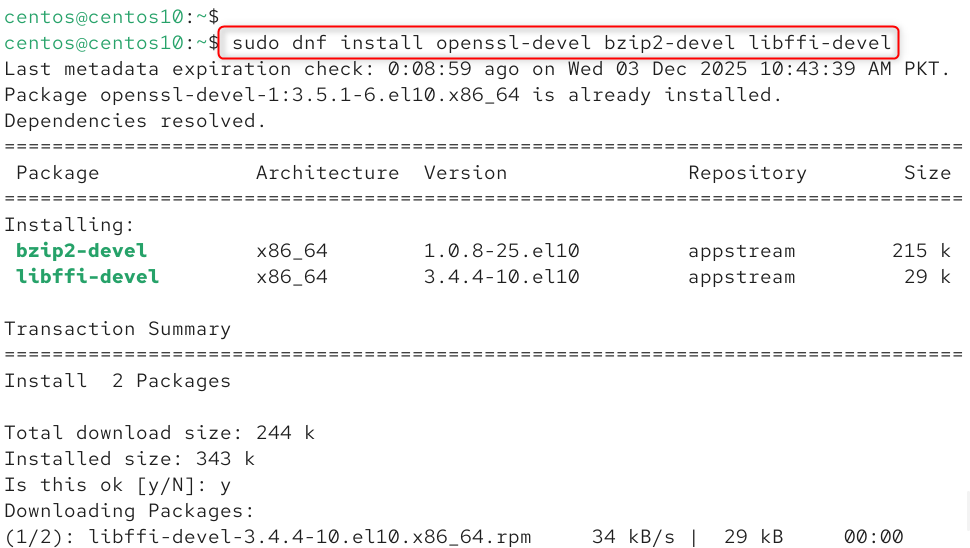
Python source code is required for some dependencies:
|
sudo dnf install openssl-devel bzip2-devel libffi-devel |
|---|

Step 2: Download the Latest Python Source Code
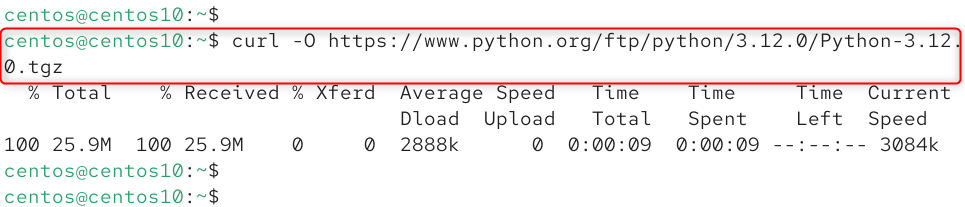
Get the latest stable Python version from python.org.
|
curl -O https://www.python.org/ftp/python/3.12.0/Python-3.12.0.tgz |
|---|

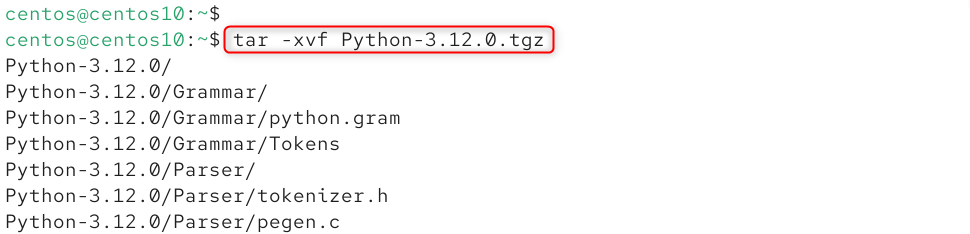
Step 3: Extract the Tarball
Now, extract the Tarball as below:
|
tar -xvf Python-3.12.0.tgz |
|---|

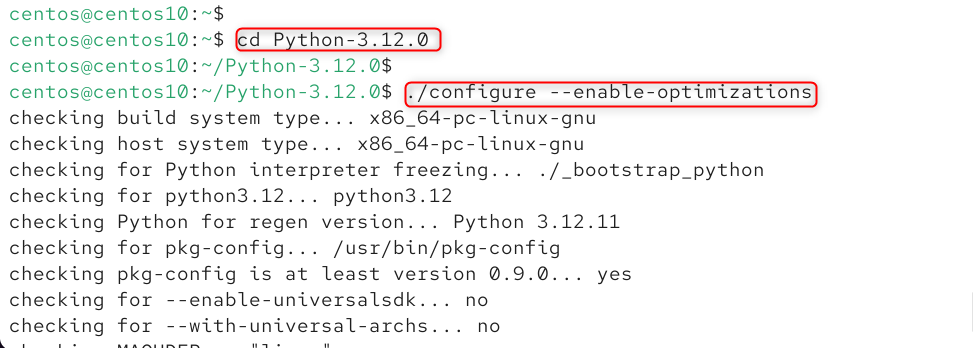
Step 4: Configure the Build
Finally, optimizes compilation for your system:
|
cd Python-3.12.0 ./configure –enable-optimizations |
|---|

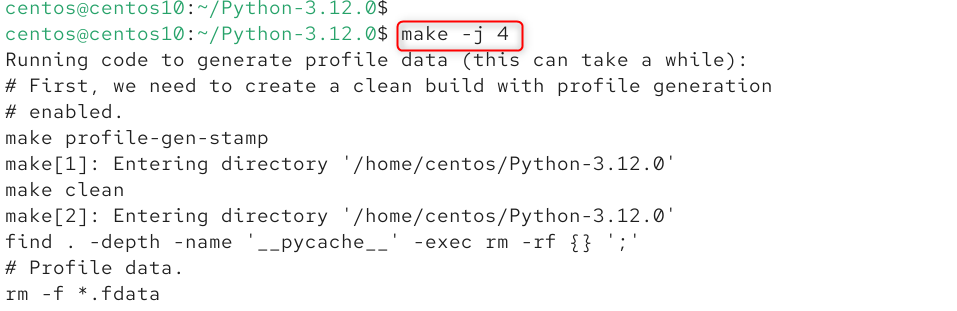
Step 5: Build Python
This step compiles your source code (may require 5-10 minutes).
|
make -j 4 |
|---|

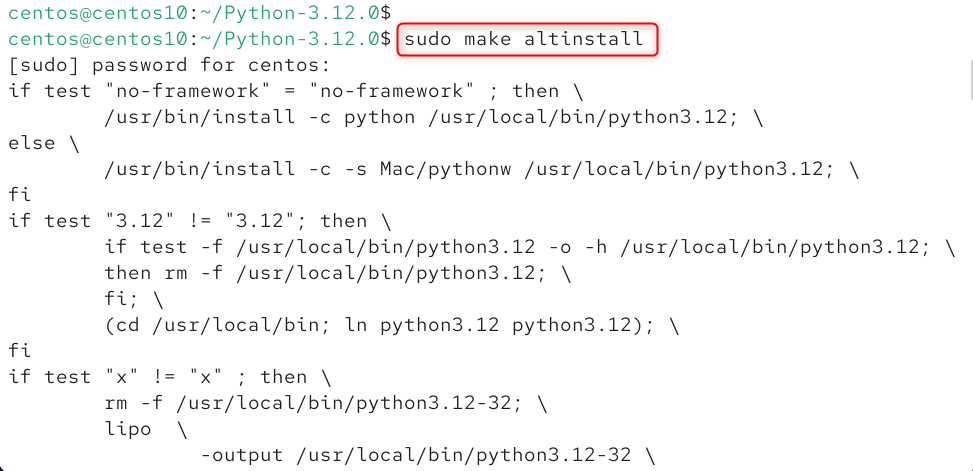
Step 6: Install Python Safely
Altinstall is a good way to avoid reinstalling the Python system.
|
sudo make altinstall |
|---|

Step 7: Verify the Installed Version
Verify that the Version installed is correct
|
python3.12 –version |
|---|


How to Set Python 3 as Default (Optional)
Be cautious if you are using Python 2.x on your system.
Step 1: Check Available Python Versions
Check the Available Python Versions
|
ls /usr/bin/python* |
|---|


Step 2: Update Alternatives
Now, update the alternative or choose the particular Python version:
|
sudo alternatives –set python /usr/bin/python3 |
|---|
OR configure manually:
|
sudo alternatives –config python |
|---|


How to Uninstall Python 3 from CentOS 10
To uninstall the Python 3 version on CentOS 10, follow the methods below:
Uninstall repository-installed Python
Uninstall packages installed by the repository:
|
sudo dnf remove python3 |
|---|


Uninstall pip-installed packages
Uninstall packages installed by pip:
|
pip3 uninstall package-name |
|---|
Uninstall source-installed Python
Remove the installation directory:
|
sudo rm -rf /usr/local/bin/python3.12 sudo rm -rf /usr/local/lib/python3.12 |
|---|


That is all from the installation of Python 3 on CentOS 10.
Conclusion
Installing Python 3 is easy on CentOS 10. Update your system first with sudo update -y. Then install Python 3 and pip with sudo install python3 and python3 pip-y. Verify the installation using python3.
You can install Python 3 on CentOS 10 in a few simple steps. The method you choose will depend on your needs. The default repository is the most stable and easiest method, while EPEL/AppStream allows you to access newer versions. Compiling Python from source is best for users who need the latest release. Installing Python 3 on CentOS 10 will allow you to create applications, automate processes, and use the latest development tools.